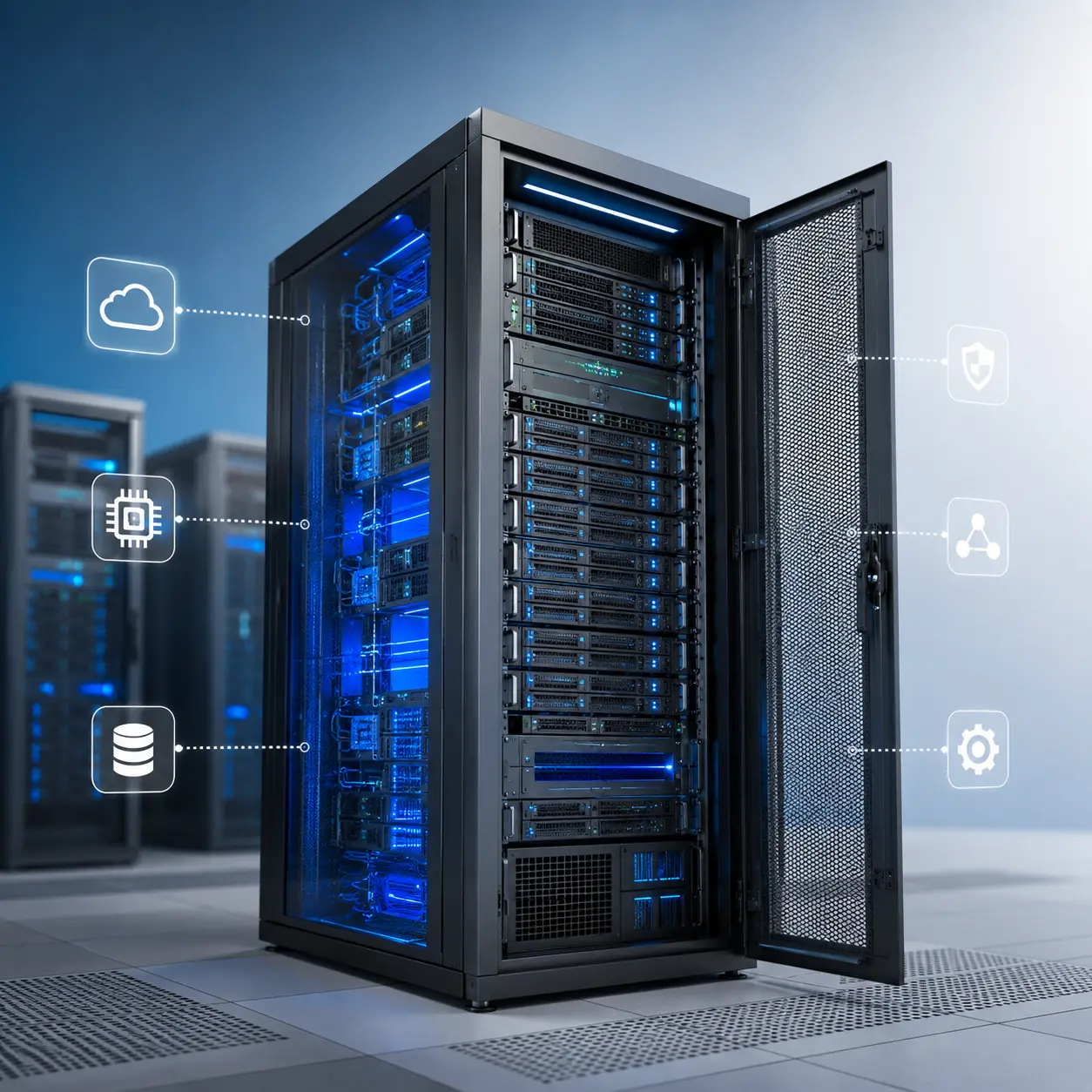
Every time you stream a movie, send an email, save files to the cloud, or use AI tools, you rely on Data Centers. These facilities are the backbone of modern Computing and digital communication. In 2026, Data Centers are growing faster than ever because businesses and users create massive amounts of Data every second.
The rise of AI, cloud Computing, remote work, streaming services, and smart devices has transformed Data Centers into one of the world’s most important technologies. Modern businesses depend on fast, secure, and energy-efficient Data Centers to store, process, and manage Data around the clock.
According to recent industry research, worldwide spending on data center systems is expected to grow rapidly in 2026 due to AI infrastructure demand. Experts also predict global IT spending will exceed $6.3 trillion this year, with Data Centers leading growth. :contentReference[oaicite:0]{index=0}
In this guide, you will learn what Data Centers are, how they work, why they matter, the latest trends in Computing infrastructure, and how modern Data Centers are shaping the future of technology.
What Are Data Centers?
Data Centers are specialized facilities that store, process, and distribute digital Data. They contain servers, networking equipment, storage systems, cooling technology, and security systems designed to keep Computing operations running continuously.
In simple terms, Data Centers are physical locations where digital information lives. Every website, cloud application, banking system, streaming platform, and AI tool depends on Data Centers for reliable Computing power.
Modern Data Centers support:
- Cloud Computing platforms
- Artificial intelligence applications
- Online banking systems
- Social media platforms
- Video streaming services
- Business applications
- Big Data analytics
- Remote work infrastructure
How Data Centers Work
Data Centers operate by combining several important Computing components into one secure environment.
1. Servers
Servers are the heart of Data Centers. These powerful computers process requests, run applications, and store Data.
2. Storage Systems
Storage devices keep digital Data safe and accessible. This includes databases, cloud files, backups, and enterprise records.
3. Networking Equipment
Routers and switches connect Data Centers to the internet and allow fast Data transfer between systems.
4. Cooling Infrastructure
Modern Computing hardware generates heat. Data Centers use advanced cooling systems, including liquid cooling and airflow management, to maintain safe temperatures.
5. Power Supply
Reliable electricity is critical for Data Centers. Facilities use backup generators, battery systems, and redundant power connections to prevent downtime.
6. Security Systems
Physical and digital security protects sensitive Data. This includes surveillance cameras, biometric access control, fire protection, encryption, and cybersecurity systems.
Why Data Centers Are Important in 2026
The world depends on digital services more than ever before. Businesses, governments, schools, hospitals, and consumers all rely on Data Centers for Computing and communication.
Several trends are driving rapid growth:
- AI and machine learning expansion
- Cloud Computing adoption
- 5G network deployment
- Remote work technologies
- Internet of Things devices
- Video streaming demand
- Big Data analytics
- Real-time Computing applications
Industry analysts report that the global data center market could reach more than $430 billion in 2026 because organizations require more Computing capacity and Data storage. :contentReference[oaicite:1]{index=1}
Types of Data Centers
Enterprise Data Centers
These Data Centers are built and managed by large organizations for internal business operations.
Cloud Data Centers
Cloud providers operate massive Data Centers that deliver scalable Computing resources through the internet.
Hyperscale Data Centers
Hyperscale facilities support enormous Computing workloads. These Data Centers are designed for rapid expansion and massive Data processing.
In 2026, hyperscale Data Centers are growing rapidly due to AI Computing demand and cloud services. :contentReference[oaicite:2]{index=2}
Edge Data Centers
Edge Computing facilities process Data closer to users. This reduces latency and improves speed for real-time applications.
Colocation Data Centers
Businesses rent space inside shared Data Centers instead of building their own infrastructure.
The Role of AI in Modern Data Centers
Artificial intelligence is transforming Data Centers faster than any other technology.
AI systems require enormous amounts of Computing power, storage, and networking capacity. Modern AI models process huge volumes of Data continuously.
Industry research shows that AI workloads are now the main driver behind rising Data Center electricity demand. Global data center electricity use could nearly double by 2030 due to AI Computing growth. :contentReference[oaicite:3]{index=3}
AI also improves Data Center operations by:
- Optimizing energy efficiency
- Predicting hardware failures
- Managing cooling systems
- Automating infrastructure monitoring
- Improving cybersecurity
- Enhancing workload distribution
Energy Consumption and Sustainability Challenges
One of the biggest challenges facing Data Centers in 2026 is energy usage.
Modern Computing systems require enormous electricity resources. Large AI-focused Data Centers can consume as much power as small cities. :contentReference[oaicite:4]{index=4}
Experts estimate that global Data Center electricity demand reached nearly 490 terawatt-hours recently and continues to rise quickly.
Key Sustainability Solutions
- Renewable energy adoption
- Advanced cooling systems
- Liquid cooling technology
- AI-powered energy optimization
- Efficient server architecture
- Heat recycling systems
- Green building designs
Sustainability has become a major priority for modern Data Centers because businesses want efficient Computing infrastructure with lower environmental impact.
Data Centers and Cloud Computing
Cloud Computing depends entirely on Data Centers.
When users access cloud storage, SaaS applications, or online collaboration tools, their Data is processed inside Data Centers located around the world.
Cloud Computing provides several benefits:
- Scalable Computing resources
- Remote accessibility
- Lower infrastructure costs
- Flexible storage capacity
- Faster deployment
- Improved business continuity
Because of cloud Computing growth, companies continue investing heavily in Data Centers and AI infrastructure.
Security in Data Centers
Protecting sensitive Data is one of the most important responsibilities of Data Centers.
Cyberattacks, ransomware, Data breaches, and system failures can cause serious financial and operational damage.
Important Security Measures
- Multi-layer cybersecurity systems
- Encryption technologies
- Access control systems
- 24/7 monitoring
- Backup and disaster recovery
- Network segmentation
- AI-powered threat detection
As Computing environments become more connected, Data Center security strategies continue evolving.
Latest Data Center Trends in 2026
1. AI Infrastructure Expansion
AI Computing demand is driving large-scale investments in Data Centers globally. Organizations require specialized GPUs and advanced hardware for AI workloads. :contentReference[oaicite:6]{index=6}
2. Liquid Cooling Adoption
Traditional air cooling is becoming less effective for high-density Computing systems. Many Data Centers now use liquid cooling technology to improve efficiency.
3. Edge Computing Growth
Edge Data Centers are becoming more important because applications require faster response times.
4. Renewable Energy Investments
Operators increasingly use solar, wind, and renewable energy sources to power Data Centers sustainably.
5. Fiber Infrastructure Expansion
Modern AI Computing systems require high-speed fiber connections to support large-scale Data movement. :contentReference[oaicite:7]{index=7}
6. Automation and AI Management
AI-powered automation tools improve Data Center monitoring, maintenance, and workload management.
Advantages of Data Centers
- Reliable Computing performance
- Centralized Data management
- Scalable infrastructure
- Enhanced Data security
- Business continuity support
- Improved application performance
- Cloud Computing enablement
- Faster Data processing
Disadvantages of Data Centers
- High energy consumption
- Expensive infrastructure costs
- Complex maintenance requirements
- Cooling challenges
- Environmental concerns
- Cybersecurity risks
- Large physical space requirements
Real-World Applications of Data Centers
Healthcare
Hospitals use Data Centers for patient records, medical imaging, and AI-assisted diagnosis.
Finance
Banks rely on secure Computing systems and Data Centers for transactions and fraud detection.
E-Commerce
Online stores depend on Data Centers for payment systems, inventory management, and customer Data.
Education
Digital learning platforms use cloud Computing and Data Centers to support remote education.
Entertainment
Streaming platforms process enormous amounts of Data through global Computing infrastructure.
The Future of Data Centers
The future of Data Centers will focus on AI Computing, sustainability, automation, and decentralized infrastructure.
Experts believe future Data Centers will become:
- More energy efficient
- AI-optimized
- Highly automated
- Powered by renewable energy
- Distributed through edge Computing
- Designed for extreme Data growth
Industry reports show that AI infrastructure investments continue accelerating worldwide because Computing demand keeps expanding rapidly. :contentReference[oaicite:8]{index=8}
As digital transformation continues, Data Centers will remain essential for managing global Data and powering the next generation of Computing technologies.
Conclusion
Data Centers are the foundation of the modern digital economy. Every cloud platform, AI system, streaming service, and online application depends on reliable Computing infrastructure and secure Data management.
In 2026, Data Centers continue evolving rapidly because the world generates more Data than ever before. AI, cloud Computing, edge Computing, and real-time applications are increasing demand for faster, smarter, and more efficient infrastructure.
As organizations continue investing in advanced Computing systems, sustainable infrastructure, and AI-powered technologies, Data Centers will remain one of the most critical parts of the global technology ecosystem. Businesses and users alike depend on these powerful facilities to manage Data, deliver digital experiences, and support the future of Computing.