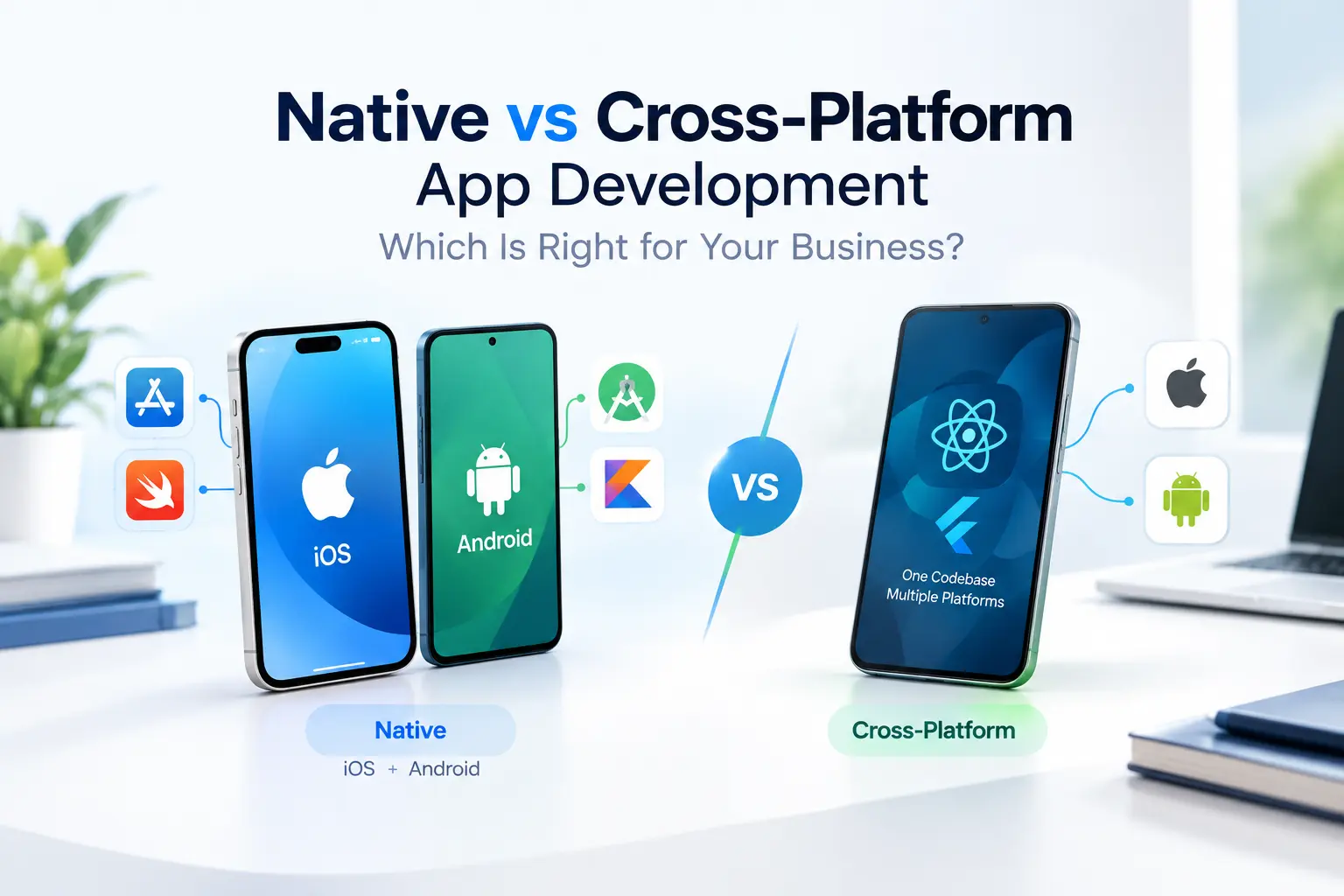
One of the first big decisions when planning a mobile app is how it will be built. Should you create separate apps for iOS and Android, or use a single codebase that runs on both? There’s no universal answer, but understanding the trade-offs can help you choose the approach that fits your goals, budget, and timeline.
What Is Native App Development?
Native development means building an app specifically for one platform using its official tools and languages. For iOS, that typically means Swift, and for Android, Kotlin. Because the app is designed for a single operating system, it can take full advantage of that platform’s features and design conventions.
What Is Cross-Platform App Development?
Cross-platform development uses a shared codebase to produce apps for multiple platforms. Popular frameworks include Flutter and React Native. Instead of writing two separate apps, your team writes most of the code once and adapts it where needed.
Key Differences at a Glance
Performance
Native apps generally offer the best performance, especially for graphics-heavy features, complex animations, or demanding real-time processing. Modern cross-platform frameworks have narrowed the gap considerably, and for many business apps the difference is barely noticeable to users.
Cost and Development Time
Building two native apps usually requires more time and resources than building one cross-platform app. If you’re working with a limited budget or need to reach the market quickly, a shared codebase can be a practical advantage.
User Experience
Native development makes it easier to follow each platform’s design guidelines and deliver an experience that feels familiar to users. Cross-platform apps can look and feel polished too, but they may need extra effort to feel truly at home on each system.
Maintenance and Updates
With a single codebase, many updates and bug fixes only need to be made once. With two native apps, each change must be implemented and tested on both platforms, which can increase ongoing effort.
Access to Device Features
Native apps get the earliest and most complete access to new platform features, such as the latest camera, sensor, or system capabilities. Cross-platform frameworks often add support over time, and in some cases custom native code is needed to bridge the gap.
When Native Is the Better Choice
- Your app depends on advanced graphics, heavy processing, or complex hardware features.
- You want the most polished platform-specific experience possible.
- You’re targeting a single platform first.
When Cross-Platform Makes More Sense
- You need to launch on iOS and Android at the same time.
- Your budget or timeline is tight.
- Your app focuses on content, forms, dashboards, or standard business features.
- You want to validate your idea with a minimum viable product before investing further.
Questions to Ask Before You Decide
- Who are my users, and which devices do they use most?
- What features are essential at launch, and which can wait?
- What is my budget and how soon do I need to go live?
- How will the app need to grow over the next few years?
- Do I need deep integration with specific device features?
Final Thoughts
Neither approach is better in every situation. The right choice depends on your users, your goals, and your resources. Taking the time to define your requirements early can save considerable time and cost later. If you’re unsure where to begin, a discovery conversation with an experienced development team can help you weigh the options and plan a path that suits your business.